

Outdoor Learning @ Whitley Lodge First School
“If children don’t grow up knowing about nature and appreciating it, they will not understand it. And if they do not understand it, they won’t protect. And if they don’t protect it, who will?” Sir David Attenborough.
Rationale
Outdoor learning experiences are often remembered for a lifetime. Integrating learning and outdoor experiences, whether through play in the immediate grounds or adventures further afield, provides relevance and depth to the curriculum in ways that are difficult to achieve indoors. At Whitley Lodge First School, we are enthusiastic about outdoor learning and believe that every child should experience the world beyond the classroom as an essential part of learning and personal development.
Outdoor Learning is a broad term that includes: outdoor play (learning through play), school grounds projects, environmental education, recreational and adventure activities, personal and social development, and more. Outdoor Learning can provide a dramatic contrast to the indoor classroom. There is strong evidence that good quality learning outside the classroom adds much value to classroom learning. It leads to a deeper understanding of concepts that span traditional subject boundaries and which are frequently difficult to teach effectively using classroom methods alone.
Our Outdoor Learning Aims and Objectives:
• bring learning to life and provide memorable experiences for our children
• encourage children to connect to nature and support them in establishing an
awareness and knowledge of the natural environment
• Increase children’s knowledge and respect for our local environment and our planet
• teach children how to explore and stay safe outside by equipping them with knowledge
of hazards and skills to keep themselves safe
• increase pupils ‘cultural capital’ and give them a range of experiences beyond the core
curriculum
• promote team-work, communication skills and critical thinking skills
• enable children to take on challenges and be risk-takers in their learning
• for children to recognise that they may have a greater sense of wellbeing from
spending time outdoors
• move their bodies and be healthier
Outdoor Learning at Whitley Lodge
At Whitley Lodge First School, we are lucky enough to have a range of outdoor provision on site, including: a separate EYFS outdoor area, two playgrounds, a timber trail, a ‘sunken pirate ship’ play area, a reflection garden, a gardening area and a large playing field for games and sporting activities.
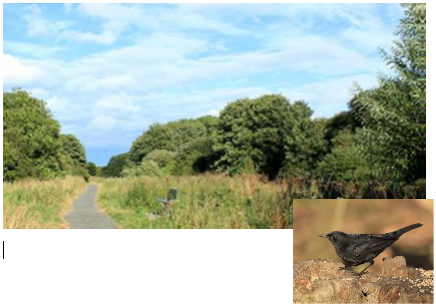
We are even more fortunate in terms of our school’s locality. WLFS is situated in close proximity to the beach, St Mary’s Lighthouse and Briar Dene (a mixture of woodland, parkland and a fresh water stream). This means we are able to take full advantage of our local area and use it as a fantastic learning resource for our children.
Beach School

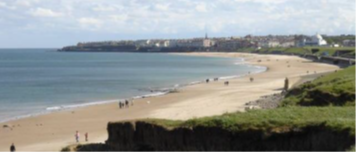
As a beach school, we offer our children a holistic experience which nurtures a child’s physical, social and emotional development and we are lucky enough to be able to use the beach right here in Whitley Bay to take the curriculum outside. At WLFS, we have a key member of staff fully trained in leading our Beach School initiative, which ensures that all staff are equipped with the theory behind it and ensure best practice is shared across school. This method of learning helps the children become aware of the coastal environment and develop a greater awareness of marine life and plants, along with a better understanding of beach safety.
We endeavour to use the coast as a platform for new learning experiences that provide children with the opportunity to explore in an outdoor environment with memorable experiences and a connection to nature; opening their eyes to this amazing habitat and inspiring them to care for our coasts.
At WLFS, we strongly believe that every child should experience the wonders of our coast and therefore provide our children with the opportunity to regularly visit, learn about and fall in love with the beach through inspirational hands-on learning. Through these learning activities children also develop important life skills such as team working, confidence in an outdoor setting and emotional intelligence.
The topics explored during our beach school sessions may include:
• how to behave sensibly and act responsibly when using the beach
• exploring the natural coastal environment
• seasons and tides
• pressures on the marine environment; including over fishing and marine pollution
• marine protected areas
• species identification and information
• coastal habitats
• understanding sea defences – hard/soft defences
• practical conservation on the sand dunes
• mini beach cleans
• environmental/marine art
• survival skills: including building shelters, campfires and outdoor cooking
Early Years Foundation Stage (EYFS)
Within the EYFS pupils have daily access to a purpose-built outdoor area. This is resourced to provide age-appropriate learning experiences to stretch and challenge pupils in line with the EYFS curriculum. During child-initiated learning, pupils have free-flow access to their outdoor area and can choose to learn outdoors throughout the year.
Learning experiences and resources enable pupils to explore the natural environment, seasons and their own interests and fascinations.
KS1/KS2
The outdoor environment is used across the National Curriculum to bring learning to life and make it ‘hands-on’ and relevant. Pupils are given regular opportunities to engage with Learning Outside the Classroom where their curriculum objectives take place outdoors. It is also of vital importance to us at WLFS that our children have a breadth of experiences beyond the National Curriculum. Children have the opportunities to build on their skills through a range of settings, from the school grounds, to local visits and a Residential to Robin Wood in Year 4.
Policy into Practice
Possibilities for outdoor learning is considered throughout our planning, using it as a context and a natural resource for learning.
We will:
- ensure that our outdoor space harnesses the special nature of the outdoors, to offer children what the indoors cannot
- ensure that our outdoor area and resources within it are flexible and versatile, where children can choose, create, change and be in charge of their play environment.
- support inclusion and meet the needs of individuals, offering a diverse range of play-based experiences.
- enable children to access the school gardens and grounds on a regular basis.
- ensure that children enjoy energetic activity outdoors and the feeling of wellbeing that it brings, including opportunities to develop their gross motor skills.
- observe, assess and record outdoor learning, ensuring that there is adequate provision for children to extend their learning.
- give children the opportunity to find a quiet space to relax in our Reflection Garden.
- develop a set of rules through discussion with children.
- help children to take responsibility and care for the outside environment and resources within it.
Health and Safety
We will support children in taking risks within a safe and secure environment. It is important to ensure that the outdoor environment offers challenges and teaches the children how to be safe and aware of others. Outdoor learning opportunities will be grasped when available and teachers will assess risk. Risk Assessments will be carried out where appropriate. School Health and Safety Policy will be followed.
Roles and responsibilities
The headteacher is responsible for:
- ensuring staff adhere to the relevant policies and that pupils are aware of their responsibilities.
- ensuring that a School Risk Assessment is conducted to identify, evaluate, and manage the specific risks associated with external trips and the activities planned.
- ensuring that there are arrangements in place for monitoring and reporting incidents associated with outdoor learning.
- ensuring that parents are informed with sufficient notice about planned outdoor learning activities, beach trips and any requirements, e.g. clothing and equipment needs.
- liaising with the SENCO, where necessary, to ensure the outdoor learning is inclusive for pupils with SEND and reasonable adjustments are made to ensure additional needs are accommodated.
- reviewing the effectiveness of this policy on an annual basis and communicating any changes to staff, parents, and pupils.
Trip Leaders are responsible for:
- conducting a detailed health and safety check before a beach visit or trip
- ensuring staff and helpers on the visit are aware of and adhere to the Risk assessment.
- taking a member of staff who is a qualified first aider on the visit, who will carry a fully stocked first-aid kit.
- inspecting equipment and tools before use to ensure they are safe for use, and that damaged or defective items are not used.
The SENCO is responsible for:
- assessing additional individual needs of pupils with SEND prior to beach visits/trips and promoting measures to ensure pupils with SEND can participate safely.
- ensuring the SEND Policy is adhered to at all times.
- liaising with the headteacher to ensure additional provision is available for pupils with SEND as required.
- ensuring that the provision put in place for pupils with SEND is monitored for effectiveness
Equal Opportunities
It is our firm belief at WLFS that all pupils should be able to have equal access to educational activities, in all areas of the curriculum. This then helps children to develop a sense of worth and the valuable place they hold in society.
Staff members are responsible for:
- adhering to this policy at all times during beach visits and trips.
- ensuring that pupils are always accounted for and supervised.
- reporting any concerns and incidents to the trip leader and asking for guidance as appropriate.
- reporting any safeguarding incidents to the DSL and asking for guidance as
appropriate. - reporting concerns regarding the provision for pupils with SEND to the SENCO.
- ensuring that pupils are always respectful to each other, staff and the natural environment.
- managing pupils in line with the Behaviour Policy when necessary.
Pupil Voice and School Council
Children’s thoughts and ideas are encouraged and considered in the planning process of
activities.
Monitoring and Evaluation
Assessment of the children’s learning will be valued equally indoors and outdoors and should be part of the same process. Subject leaders will be responsible for monitoring their subject area outdoors and identifying strengths and areas for development moving forward.
This policy operates in conjunction with the following school policies:
- Child Protection and Safeguarding Policy
- Special Educational Needs and Disabilities (SEND) Policy
- Behaviour Policy
- Educational Visits and School Trips Policy
- Health and Safety Policy
Policy Review
The policy will be reviewed annually as part of our schedule of policy review.


